This morning, a reader wrote:
Test scores are the only thing that matter. They tell us what has been learned and retained by a student. All this nonsense ridiculing test scores is from the same folks who ridicule drills as "drill and kill." Laurie, you have bought into the liberal mindset of the educrats who we have hired to administrate our district. How unfortunate for our students that you abhor critical thinking.
My response:
Au contraire, mon frere!
(Sorry, I could not resist)
It is precisely because I do not abhor critical thinking that I can argue against your narrow belief that “test scores are the only thing that matter.” (I do, however, abhor the word abhor, and other such hyperbole, on my blog.)
First, let’s address the specific issue in question – whether test scores are the best (or “only”) way to judge a textbook’s value. My point was that the textbook alone is not the only variable influencing scores. Do you completely discount the influence of teachers? Do you not believe there are good teachers and bad teachers? Does it make no difference if students spend 20 minutes per day vs. 90 minutes per day on math? What about other materials, aka supplementation? What about tutoring? What about the students themselves? Don’t they play into this equation at all? The members of Ridgewood’s Math Planning Team listed student achievement (in other districts) as one of the criteria to consider when evaluating the textbooks, but they decided as a group that it would not be the #1 criterion. I think that makes sense, and this whole paragraph is an example of me using “critical thinking” on the topic.
As for the value of testing in general...well, I’ve sort of addressed it above, haven’t I? Standardized tests don’t measure much besides test-taking ability. They do not show how students are learning, what they are learning, what kinds of help they might need or the quality of teaching they are receiving. They don’t measure the ability to think or create or use the critical thinking of which you are so enamored.
The standardized tests that our children are subject to in 2009 are based on behaviorist psychological theories of the 19th century. In the past 100+ years, cognitive and developmental psychologists have come to understand that people learn by connecting what they already know with what they are trying to learn – not by recalling isolated facts and narrow skills.
Relying on standardized test scores is the easy way out, the lazy way, and the political way, via misguided efforts like No Child Left Behind. Standardized tests are also the dangerous way, dangerous to education in general. As schools feel more and more pressure to focus on test scores, we are pressured to narrow curriculum to match the tests. And if you're looking for a way to ensure accountability, the tests our kids take really make our schools accountable to one thing only: the test companies.
Want to hear something interesting? Singapore’s education officials have been studying U.S. schools, with a special interest in reducing their emphasis on standardized tests and increasing their use of authentic assessment. (More to come on this topic.)
Finally, I’m not going to take your bait on the “liberal mindset” criticism...politics should have no place in education. Why do you folks always fall back on that?
Wednesday, May 27, 2009


Tuesday, May 26, 2009
Kids and texting
Interesting article in today's New York Times about texting among young people. According to a study, American teenagers sent and received an average of 2,272 text messages per month in the fourth quarter of 2008 — almost 80 messages a day, more than double the average of a year earlier. This phenomenon -- which is pretty understandable when you combine adolescents' biological need to exert their independence with the unlimited texting plans that come with many phones -- may have consequences for some kids' health, social development and learning. You can read the entire article by clicking here.
Monday, May 25, 2009
Teaching and learning and the information glut
Two interesting things I read today, and I'm pretty sure they're related:
First, a letter to the editor in today's NY Times, said: "Students have enormous access to information on every subject under the sun. Teaching, when I first began 40 years ago, was mostly about giving students information they needed to understand what I was teaching. Today, they have gluts of information. What they don’t have is a capacity to understand it all, analyze it, evaluate it and make it operative in their lives.
The challenge for all of us in education is to accept the fact that we do not control access to information, but we do control the central task of turning information into real learning. That challenge is made more urgent by the fact that long before these students go to college, they have already gained access to and acquired more information than any previous generation. And the future is likely to see that information stream go deeper earlier.
Learning how to learn is as urgent a task as what we learn."
I agree with the writer...and I wonder how much our current and future teachers are adjusting their perspective and approach. Surely, the old "tried and true" can't simply apply to today's reality of increased access to information. Certainly, how we define "learning" has got to be different in a world where our students can access the Encyclopedia Britannica from their cell phones while they contemplate a new flower alongside a trail or pass a historical marker going 50 miles per hour. Critical thinking, learning how to think and learn, and learning where to find the appropriate information or tool (or mathematical formula) must be priorities.
The second thing that struck me today, as I was browsing audiobooks online -- you can actually get Cliff's Notes as audiobooks! I was shocked! Now the shortcut has a shortcut! What's the difference between working through the difficult prose of The Scarlet Letter and listening to the Cliff's Notes version? I'm not sure, but they are not interhangeable! Clearly we have to work out new methods of learning and using information. If I just need to refresh my memory on a plot point, Google or Cliff's Notes can satisfy in a flash.
Listening to the Cliff's Notes is tempting...sort of like the exercise machines on TV -- the Ab Blaster or whatever. They LOOK like real exercises, where the machine does all the work, making "results" easier and faster. But we know how effective those machines are, don't we?
We definitely have our work cut out for us, as the education paradigm shifts. Of course, the first step is recognizing the shift.
First, a letter to the editor in today's NY Times, said: "Students have enormous access to information on every subject under the sun. Teaching, when I first began 40 years ago, was mostly about giving students information they needed to understand what I was teaching. Today, they have gluts of information. What they don’t have is a capacity to understand it all, analyze it, evaluate it and make it operative in their lives.
The challenge for all of us in education is to accept the fact that we do not control access to information, but we do control the central task of turning information into real learning. That challenge is made more urgent by the fact that long before these students go to college, they have already gained access to and acquired more information than any previous generation. And the future is likely to see that information stream go deeper earlier.
Learning how to learn is as urgent a task as what we learn."
I agree with the writer...and I wonder how much our current and future teachers are adjusting their perspective and approach. Surely, the old "tried and true" can't simply apply to today's reality of increased access to information. Certainly, how we define "learning" has got to be different in a world where our students can access the Encyclopedia Britannica from their cell phones while they contemplate a new flower alongside a trail or pass a historical marker going 50 miles per hour. Critical thinking, learning how to think and learn, and learning where to find the appropriate information or tool (or mathematical formula) must be priorities.
The second thing that struck me today, as I was browsing audiobooks online -- you can actually get Cliff's Notes as audiobooks! I was shocked! Now the shortcut has a shortcut! What's the difference between working through the difficult prose of The Scarlet Letter and listening to the Cliff's Notes version? I'm not sure, but they are not interhangeable! Clearly we have to work out new methods of learning and using information. If I just need to refresh my memory on a plot point, Google or Cliff's Notes can satisfy in a flash.
Listening to the Cliff's Notes is tempting...sort of like the exercise machines on TV -- the Ab Blaster or whatever. They LOOK like real exercises, where the machine does all the work, making "results" easier and faster. But we know how effective those machines are, don't we?
We definitely have our work cut out for us, as the education paradigm shifts. Of course, the first step is recognizing the shift.
Friday, May 22, 2009
SAT tutors offer scant help, study finds
From today's Record...as the parent of someone whose SAT scores went DOWN after doing a weekly Kaplan test prep course, this does not surprise me!
BY KATHLEEN CARROLL
NorthJersey.com
Recession-minded families wondering if they should ditch that $100-an-hour SAT tutor got a murky answer this week from the National Association of College Admissions Counselors.
Coaching and prep classes for college-admissions exams are helpful, but don’t usually change students’ scores all that much. But any increase could be significant because some colleges use very small score differences to choose between similar candidates for admission, an NACAC report said.
Some test-prep providers promise score gains of up to 100 points on the SAT, but students usually gain about 30 points, according to the report. On the math section of the exam, average gains are between 10 and 20 points; on the reading section, students gain an average of 5-10 points after being coached, the report said.
Short-term preparation classes result in "very, very small gains," said Laurence Bunin, general manager of the SAT and senior vice president for operations at the College Board, which developed and administers the test.
"The test is testing what you learned in school, so unless students are learning more material, they are not going to do a lot better," he said. "There’s no trick. Tricks don’t work."
Recession-minded families wondering if they should ditch that $100-an-hour SAT tutor got a murky answer this week from the National Association of College Admissions Counselors.
Coaching and prep classes for college-admissions exams are helpful, but don’t usually change students’ scores all that much. But any increase could be significant because some colleges use very small score differences to choose between similar candidates for admission, an NACAC report said.
Some test-prep providers promise score gains of up to 100 points on the SAT, but students usually gain about 30 points, according to the report. On the math section of the exam, average gains are between 10 and 20 points; on the reading section, students gain an average of 5-10 points after being coached, the report said.
Short-term preparation classes result in "very, very small gains," said Laurence Bunin, general manager of the SAT and senior vice president for operations at the College Board, which developed and administers the test.
"The test is testing what you learned in school, so unless students are learning more material, they are not going to do a lot better," he said. "There’s no trick. Tricks don’t work."
BY KATHLEEN CARROLL
NorthJersey.com
Recession-minded families wondering if they should ditch that $100-an-hour SAT tutor got a murky answer this week from the National Association of College Admissions Counselors.
Coaching and prep classes for college-admissions exams are helpful, but don’t usually change students’ scores all that much. But any increase could be significant because some colleges use very small score differences to choose between similar candidates for admission, an NACAC report said.
Some test-prep providers promise score gains of up to 100 points on the SAT, but students usually gain about 30 points, according to the report. On the math section of the exam, average gains are between 10 and 20 points; on the reading section, students gain an average of 5-10 points after being coached, the report said.
Short-term preparation classes result in "very, very small gains," said Laurence Bunin, general manager of the SAT and senior vice president for operations at the College Board, which developed and administers the test.
"The test is testing what you learned in school, so unless students are learning more material, they are not going to do a lot better," he said. "There’s no trick. Tricks don’t work."
Recession-minded families wondering if they should ditch that $100-an-hour SAT tutor got a murky answer this week from the National Association of College Admissions Counselors.
Coaching and prep classes for college-admissions exams are helpful, but don’t usually change students’ scores all that much. But any increase could be significant because some colleges use very small score differences to choose between similar candidates for admission, an NACAC report said.
Some test-prep providers promise score gains of up to 100 points on the SAT, but students usually gain about 30 points, according to the report. On the math section of the exam, average gains are between 10 and 20 points; on the reading section, students gain an average of 5-10 points after being coached, the report said.
Short-term preparation classes result in "very, very small gains," said Laurence Bunin, general manager of the SAT and senior vice president for operations at the College Board, which developed and administers the test.
"The test is testing what you learned in school, so unless students are learning more material, they are not going to do a lot better," he said. "There’s no trick. Tricks don’t work."
Thursday, May 21, 2009
Celebration of the Arts tonight at RHS
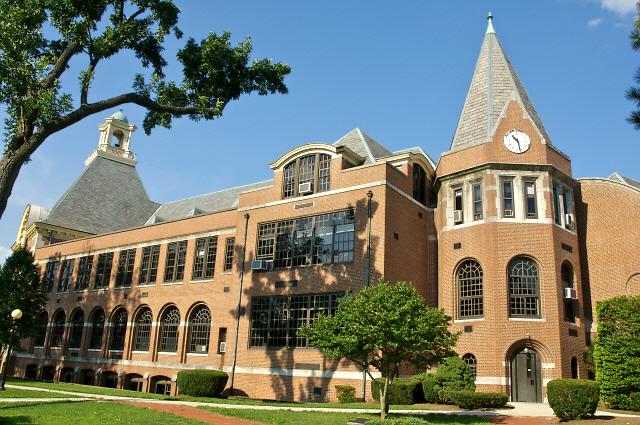
Tonight is the opening reception and performance for the Celebration of the Arts at Ridgewood High School. If you want to be blown-away by the talent, creativity and hard work of RHS visual and performing artists, you should stop by. The reception begins at 7:00 p.m. and the concert starts at 8:00 p.m in the Campus Center.
The performances and art displays will continue for students from 8:00 a.m. to 3:00 p.m. tomorrow (Friday).
The performances and art displays will continue for students from 8:00 a.m. to 3:00 p.m. tomorrow (Friday).
RHS students make a difference
This morning was the "You Make a Difference" breakfast at the high school and I had the pleasure of hearing about several students who have made positive differences in others' lives, through small or large efforts. Today's honorees included:
-- Two boys who walked a staff member's dog while she was incapacitated
-- A group of theater students who donated their time to coach special needs children in a production of Charlie & the Chocolate Factory
-- A boy with a perpetually positive attitude
-- A group of students who raised awareness (and over $6,000) for autism awareness
-- A boy who went out of his way to make sure his teacher knew about another student's efforts
-- A New Players student who in one year not only learned to tap dance at a high level but inspired others to dance and founded a new group of RHS dancers called the Wood Hoofers
Nice job, everyone!
-- Two boys who walked a staff member's dog while she was incapacitated
-- A group of theater students who donated their time to coach special needs children in a production of Charlie & the Chocolate Factory
-- A boy with a perpetually positive attitude
-- A group of students who raised awareness (and over $6,000) for autism awareness
-- A boy who went out of his way to make sure his teacher knew about another student's efforts
-- A New Players student who in one year not only learned to tap dance at a high level but inspired others to dance and founded a new group of RHS dancers called the Wood Hoofers
Nice job, everyone!
Wednesday, May 20, 2009
Quiet today...
Not going to be blogging today...too much work to do (darn this job gets in the way of my life!). Also, my daughter gets home from college tonight! Back soon...
Committee Assignments
So we worked out our committee assignments for the 09-10 school year. My assignments (pretty much the same as this past year) are:
• Communications
• Facilities
• Fields (Joint Village/Board Commmittee)
• Ridgewood Community School Advisory Council
• Rep to the RHS HSA
I want to confirm some of the others, but when I do I'll post the complete list of committee assignments here.
• Communications
• Facilities
• Fields (Joint Village/Board Commmittee)
• Ridgewood Community School Advisory Council
• Rep to the RHS HSA
I want to confirm some of the others, but when I do I'll post the complete list of committee assignments here.
Tuesday, May 19, 2009
Math Presentation
Just wanted to let you know that the complete presentation from the Math Planning Team is now available on the homepage of the District website. Click here. This includes the PowerPoint plus all the links to the data, scores, parent and teacher ratings, etc., that were used to make the selection of enVision Math as the K-5 textbook. There's a lot of info available -- much more than was presented at the meeting. There's also all the historical documents, including the vision statement created by the committee, the criteria by which the textbooks were judged, and more. The webcast of the meeting is also available, click here.
There's new and then there's new.
Last night there was a comment about the newness of the enVision math program. The speaker asked (I’m paraphrasing), “If you had a newborn infant, would you buy the brand new, untested car seat?” First of all, they don’t sell “untested” car seats. Consumers demand some sort of quality/safety testing, the results of which are usually posted on the car seat’s packing or label. But to continue with the analogy, if the car seat was produced by a longtime maker of car seats, a company that has been designing car seats for years, and the latest offering is their newest model, based on previous models but improved through research and testing and redesign, then YES. That’s the car seat I’d buy. I would not buy the first-ever car seat from the brand new “John Doe Car Seat Co.” And I would not buy the car seat marketed as “the old-fashioned car seat, just like the one you rode in as a child in the 60s or 70s.” (Remember, this isn’t my analogy, I’m just taking it a little further to make a different point.)
I, too, questioned the newness of enVision. (Sheila beat me to the question last night!) But then I looked at how it’s really an evolution of traditional math programs from Scott Foresman-Addison Wesley, with “improvements” based on what educators have learned about teaching and learning.
I thought a lot this week about the concept of newness and our different reactions to it. Sometimes we’re excited by the new. We’re drawn to it. It’s human nature and it’s also part of our American culture. But other times we’re just as skeptical of the new. We don’t trust it. It’s unfamiliar. We want the comfort of the things we know. The good old days. I’m not sure what it is that triggers one response over the other. I can honestly say when I first read about enVision, I said, “well, scratch that one, it’s too new.” But then I looked into it and my opinion changed. I became more comfortable. Turning the pages of the textbooks and speaking to teachers who use it (in other districts), I moved from the skeptical to the excited. And maybe that’s part of the recipe for our response to new things: Education. Information. Research. The more we know about something, the more we are able to feel comfortable about it, regardless of it being new or old.
Have a good evening.
I, too, questioned the newness of enVision. (Sheila beat me to the question last night!) But then I looked at how it’s really an evolution of traditional math programs from Scott Foresman-Addison Wesley, with “improvements” based on what educators have learned about teaching and learning.
I thought a lot this week about the concept of newness and our different reactions to it. Sometimes we’re excited by the new. We’re drawn to it. It’s human nature and it’s also part of our American culture. But other times we’re just as skeptical of the new. We don’t trust it. It’s unfamiliar. We want the comfort of the things we know. The good old days. I’m not sure what it is that triggers one response over the other. I can honestly say when I first read about enVision, I said, “well, scratch that one, it’s too new.” But then I looked into it and my opinion changed. I became more comfortable. Turning the pages of the textbooks and speaking to teachers who use it (in other districts), I moved from the skeptical to the excited. And maybe that’s part of the recipe for our response to new things: Education. Information. Research. The more we know about something, the more we are able to feel comfortable about it, regardless of it being new or old.
Have a good evening.
Subscribe to:
Posts (Atom)



 Posts
Posts


